
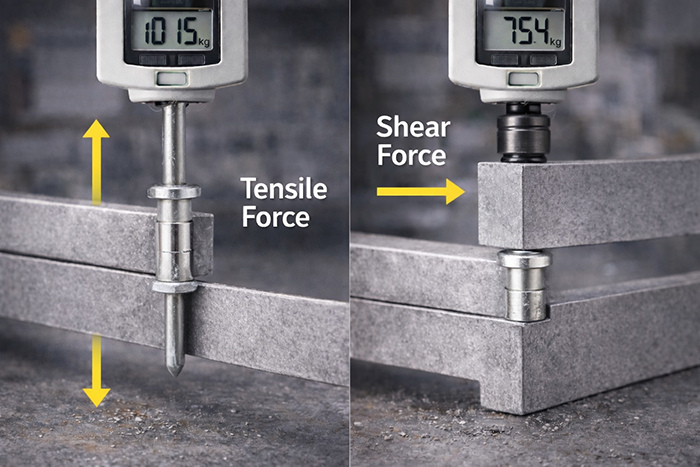
Mechanical tests on rivets are not just numbers in a table, but a snapshot of how the fastening will perform in service. Values such as tensile strength and shear strength indicate, under controlled conditions, the load a joint can withstand before failure.
Tensile strength measures the rivet’s resistance when forces tend to pull the two sheets apart along the fastening axis. Shear strength, on the other hand, relates to forces acting parallel to the plane of the sheets, which are typical in many structural assemblies.
Correctly interpreting these data allows you to determine the appropriate number and type of rivets based on the expected loads, avoiding both costly overdesign and potentially dangerous underdesign.